Define the Application Before Choosing a Material
A technical data sheet can help compare polymers, but material selection should begin with what the component must do.
Engineers and product designers should establish:
- the type and duration of mechanical loading
- operating and storage temperatures
- exposure to moisture, chemicals or ultraviolet light
- dimensional and tolerance requirements
- impact and wear conditions
- cosmetic expectations
- assembly and joining methods
- expected product life
- production quantities
- cost and sustainability priorities
These factors create a practical performance profile.
The complete operating environment matters. A polymer that performs well indoors may behave differently when exposed to heat, cleaning chemicals, moisture or sustained loading.
Properties should not be assessed separately either. Increasing stiffness may reduce flexibility. Glass reinforcement may improve dimensional stability but may also affect flow, appearance, and mould wear.
The best material is the one that provides the appropriate balance across the complete specification.
Early collaboration with a moulding partner helps connect these requirements with component geometry and production behaviour. Through our Plastic Injection Moulding Services, we support projects from initial design review through to repeatable volume manufacture.
Mechanical Performance
Strength, Stiffness and Impact Resistance
Strength describes a material’s ability to withstand loading without failing. Stiffness describes its resistance to deformation. Impact resistance relates to its ability to absorb sudden force.
A structural bracket may require strength and stiffness. A protective housing may need to resist impact without cracking. A clip must flex without permanent deformation.
Engineering plastics such as nylon, polycarbonate and acetal may be considered where higher mechanical performance is required. Reinforced grades can provide greater stiffness, although they may also create directional shrinkage, visible fibres and additional tool wear.
Geometry remains just as important as the resin. Ribs, radii, wall sections and load paths can improve performance without automatically requiring a more expensive material.
Impact performance is also influenced by temperature, wall thickness, gate position, weld lines and sharp corners. A strong material can still fail where the component design creates a local stress concentration.
Where impact is critical, testing should reflect the likely direction of force and real operating conditions.
Material and geometry should therefore be reviewed together. Our forthcoming article on [Design for Manufacture in Plastic Injection Moulding – insert URL once published] will explore how features such as wall thickness, draft, ribs and radii affect mouldability and performance.
Flexibility and Fatigue
Some components flex once during assembly. Others move repeatedly throughout their service life.
Examples include snap fits, living hinges, clips, seals and cable protection.
Polypropylene is commonly considered for integral hinges because suitable grades can provide good fatigue resistance. Thermoplastic elastomers, or TPEs, may be selected where softness, grip, sealing or elastic recovery is required.
The correct material depends on the degree and frequency of movement, temperature, chemical exposure and expected service life.
Part geometry remains critical. A poorly designed clip may generate excessive local strain even when produced from a flexible polymer.
Where rigid and flexible regions need to be combined, overmoulding may be appropriate. The two materials must then be assessed for adhesion, processing compatibility and long-term performance.
Temperature, Chemical and Wear Resistance
Temperature can change a polymer’s strength, stiffness, impact behaviour and dimensions.
Engineers should consider more than the highest operating temperature. Exposure duration, repeated heating and cooling, nearby motors or electronics, cleaning cycles and low-temperature storage may all affect performance.
A material that tolerates a short temperature peak may not remain stable under continuous heat. Some polymers also become less flexible or more brittle in cold conditions.
Chemical exposure requires similar care. Components may encounter fuels, oils, detergents, solvents, lubricants or industrial cleaners.
Polypropylene and polyethylene can provide resistance to many chemicals. Acetal may be considered for components exposed to fuels or lubricants. However, compatibility should never be assumed from the general material name.
Performance may change according to:
- chemical concentration
- temperature
- exposure duration
- applied stress
- moulded-in stress
- cleaning frequency
A polymer that survives brief contact may behave differently during prolonged exposure or while under load.
Wear and friction matter where components slide, rotate or engage repeatedly. Acetal and some nylon grades are often considered for gears, guides, latches and moving parts.
The mating surface, contact pressure, speed, contamination and number of operating cycles all contribute. The material should be evaluated as part of the complete mechanism rather than in isolation.
Dimensional Stability, Shrinkage and Warpage
Dimensional stability is important where a component must hold tight tolerances or align accurately within an assembly.
Dimensions can change because of:
- mould shrinkage
- uneven cooling
- moisture absorption
- temperature changes
- internal stress
- creep under continuous loading
- fibre orientation
Nylon can absorb moisture, which may alter both its dimensions and mechanical behaviour. Acetal is often considered where relatively low moisture absorption and dimensional consistency are important.
The achievable tolerance does not depend solely on the polymer. Part size, wall thickness, gate position, cavity layout and process control also affect the result.
All thermoplastics contract as they cool, but shrinkage varies between materials and grades.
This contraction affects the dimensions used to manufacture the mould cavity. It can also contribute to warpage, sink, poor flatness and feature misalignment.
Semi-crystalline polymers such as polypropylene, polyethylene, nylon and acetal generally shrink differently from amorphous materials such as ABS and polycarbonate.
Reinforced polymers may shrink at different rates along and across the direction of flow, making warpage more difficult to control.
Published shrinkage figures are useful during planning but are not exact predictions. Actual behaviour depends on the specific grade, geometry, mould design and processing conditions.
Material substitutions after tooling should therefore be approached carefully.
Surface Finish, Colour and Appearance
The selected polymer affects how an injection-moulded component looks and feels.
Different materials reproduce polished surfaces, textures and fine details differently. The choice may also affect the visibility of weld lines, flow marks, sink, fibres, gate vestiges and scratches.
ABS is often considered where colourability and a good cosmetic surface are required. Polycarbonate may provide transparency in suitable applications. Polypropylene offers a different visual and tactile result and may be selected where low density or flexibility is more important.
Glass reinforcement can improve stiffness but may create a more technical surface appearance. It can also make consistent colour matching more difficult.
Colour should be tested in the intended production resin. A masterbatch may produce different results when used with another polymer.
Any downstream process must also be considered. Printing, painting, bonding, laser marking and welding can be affected by additives and surface properties.
Where further processing is required, our Assembly Services enable moulding, joining, testing, and finishing operations to be considered within a single manufacturing programme.
Weight and Total Cost
Material density affects component weight.
This may be important for handheld products, portable equipment, transport applications or assemblies containing several moulded parts.
Polypropylene and polyethylene are relatively low-density materials and can provide weight advantages where their other properties are suitable.
However, density should not be viewed separately from design. A lighter material may require thicker walls or additional ribs. A higher-performing polymer may support a thinner component.
The useful comparison is therefore the weight of a finished design that meets the specification, not simply the density of the raw material.
Raw-material price is also only one part of total cost.
Material choice can affect:
- cycle time
- drying requirements
- scrap
- mould maintenance
- finishing
- assembly
- inspection
- product life
A lower-cost polymer may become expensive if it creates higher scrap or premature failure. An engineering plastic may also add unnecessary cost where a commodity material can meet the requirement.
The most cost-effective choice is the material that delivers the required performance through a stable production process.
Commodity and Engineering Plastics
Commodity plastics are generally used where efficient processing, competitive cost and moderate mechanical performance are priorities.
Common examples include polypropylene and polyethylene. These materials can deliver excellent results when applied correctly. “Commodity” does not mean low quality.
Engineering plastics are often considered where greater stiffness, temperature resistance, wear performance or dimensional stability is required.
Examples include ABS, nylon, polycarbonate and acetal.
At a practical level:
- ABS can provide a balance of stiffness, impact performance and cosmetic quality.
- Polypropylene offers low density, chemical resistance and fatigue performance.
- Polyethylene can provide toughness, low moisture absorption and chemical resistance.
- Nylon may offer strength, wear resistance and temperature performance, but moisture absorption must be considered.
- Polycarbonate may suit applications requiring impact resistance or transparency.
- Acetal can provide low friction, wear resistance and dimensional stability.
- TPEs are used where flexibility, grip or sealing is needed.
These descriptions are starting points only. The exact production grade must be assessed against the application, geometry and process.
How Material Choice Affects Tooling and Moulding
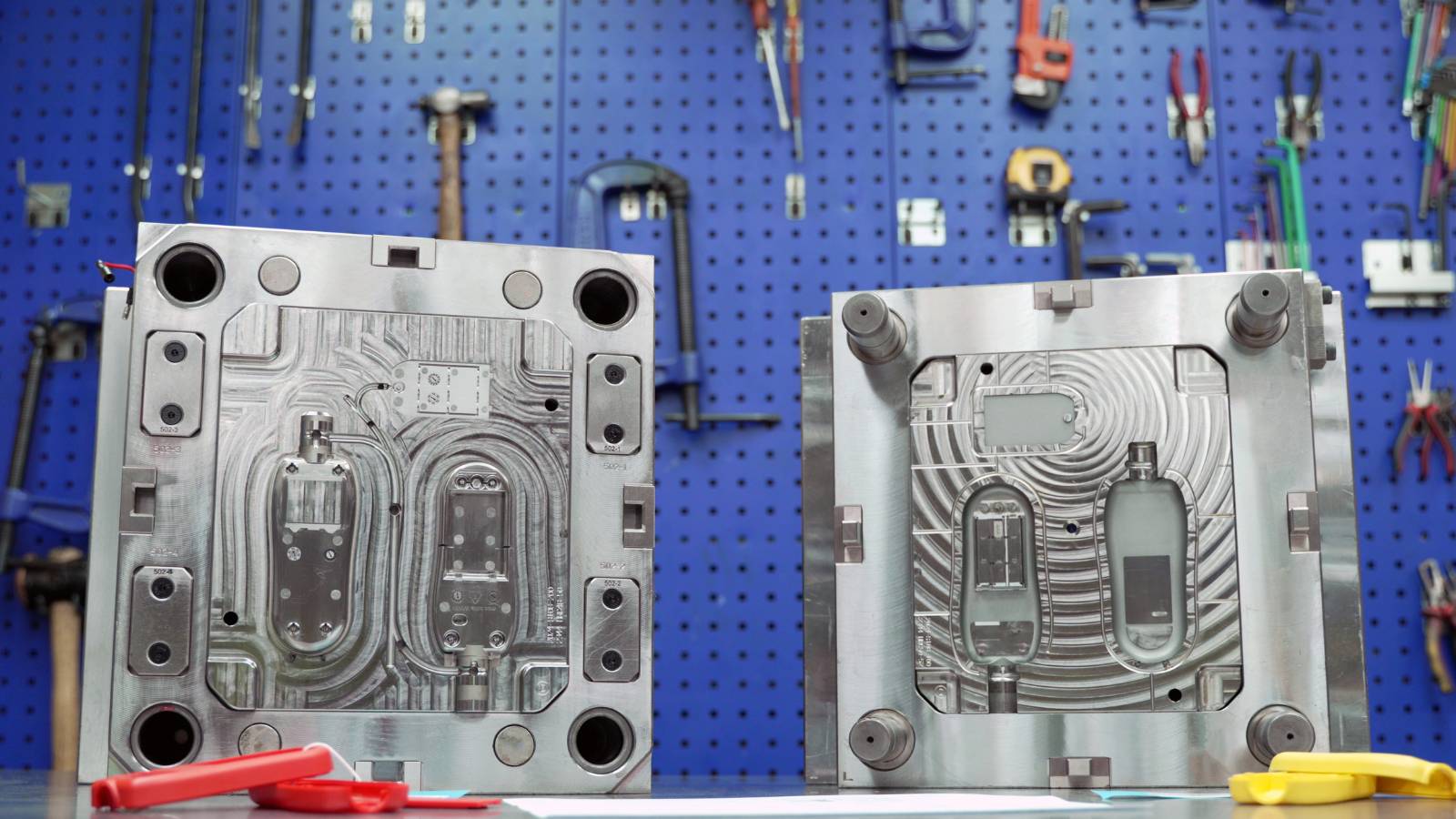
Material, component design and tooling are directly connected.
The selected polymer can influence:
- cavity dimensions
- gate position and size
- runner design
- venting
- cooling
- draft
- mould temperature
- injection pressure
- tool wear
A high-viscosity material may need larger gates or revised flow paths. A high-temperature polymer may require more advanced mould-temperature control. Moisture-sensitive materials may need controlled drying before moulding.
Cooling behaviour affects both cycle time and dimensional consistency. Thick sections or high mould temperatures may extend the cooling phase.
Filled and reinforced polymers can also be abrasive. Glass fibres and mineral fillers may increase wear around gates and moving tool components.
Expected production volume should therefore influence the selection of tool steel, surface treatment and maintenance strategy.
Choosing the material before tool design allows these factors to be addressed from the outset.
Through our Tooling Services, we cover tool design, manufacture and validation, helping customers match the tooling approach to the selected material and expected production volume.
Testing in Production-Intent Materials
A 3D-printed prototype is useful for assessing shape, size, ergonomics and basic assembly.
However, printed material may not behave like the intended injection-moulding polymer.
The manufacturing process affects shrinkage, weld lines, internal stress, surface finish and mechanical performance. This becomes important when testing clips, seals, impact resistance, chemical exposure, tight tolerances or assembly forces.
Injection-moulded prototypes produced in the intended material can provide more representative evidence.
We use rapid mould tooling inserts manufactured with our Formlabs Form 4 SLA system. These inserts can be fitted into bespoke bolster systems to create moulded parts in production-intent polymers before investment in full production tooling.
This approach can help teams evaluate material performance and moulding behaviour under realistic conditions.
Our 3D Rapid Prototyping Services support early design development, while rapid mould tooling can help bridge the gap between printed prototypes and production components.
Further guidance is available in Transitioning from 3D Printing to Injection Moulding.
Recycled, Bio-Based and Sustainable Materials
Sustainability is becoming an increasingly important part of injection moulding material selection.
Potential approaches include:
- recycled content
- bio-based polymers
- recyclable mono-material designs
- reduced component weight
- longer product life
- easier disassembly and recovery
The terminology must be used carefully.
A bio-based material is produced wholly or partly from renewable biological resources. It is not necessarily biodegradable.
A biodegradable polymer is designed to break down under specified conditions. It is not necessarily bio-based and should not be assumed to biodegrade in every environment.
A recycled polymer may reduce demand for virgin feedstock, but suitability still depends on consistency, contamination, appearance and mechanical performance.
The environmental impact of a material cannot be judged from one characteristic alone. Manufacturing efficiency, part weight, service life, transport and end-of-life routes may all affect the wider result.
Sustainable Options Must Meet the Technical Requirements
A recycled or bio-based material must still be assessed for:
- strength and stiffness
- impact resistance
- durability
- temperature performance
- chemical exposure
- moisture sensitivity
- dimensional stability
- shrinkage
- surface finish
- end-use conditions
A material that fails prematurely may increase waste and replacement demand, even if its feedstock initially appears more sustainable.
Greener material selection requires the same engineering discipline as any other polymer decision.
Our Renewable Material Test Piece
We have developed a renewable-material test piece to evaluate bio-based, recycled, and other lower-impact polymers under practical moulding conditions.
It includes representative features such as bosses, ribs, varying wall sections, surface finishes, flexible clips and draft angles.
These features allow engineers to assess how a candidate material flows, shrinks, flexes and reproduces mould detail.
The test piece does not prove suitability for every application. It provides practical evidence that can be reviewed alongside supplier data and product-specific testing.
Customers exploring lower-impact materials can find further information on our Green Materials & Bio-Plastics page.
When to Involve an Injection Moulding Partner
A moulding partner should ideally be involved while the design and material specification can still be changed.
Early input is particularly useful where:
- tolerances are tight
- walls are thin
- the part contains clips or moving features
- heat or chemicals are involved
- surface finish is important
- reinforced or sustainable materials are being considered
- the project is moving from 3D printing into production
Our engineering team can assess whether the material will fill the geometry, hold the required tolerance and work with the proposed tooling and finishing processes.
Resolving these questions before tool manufacture is generally more efficient than correcting problems during mould trials.
How We Support Material Selection
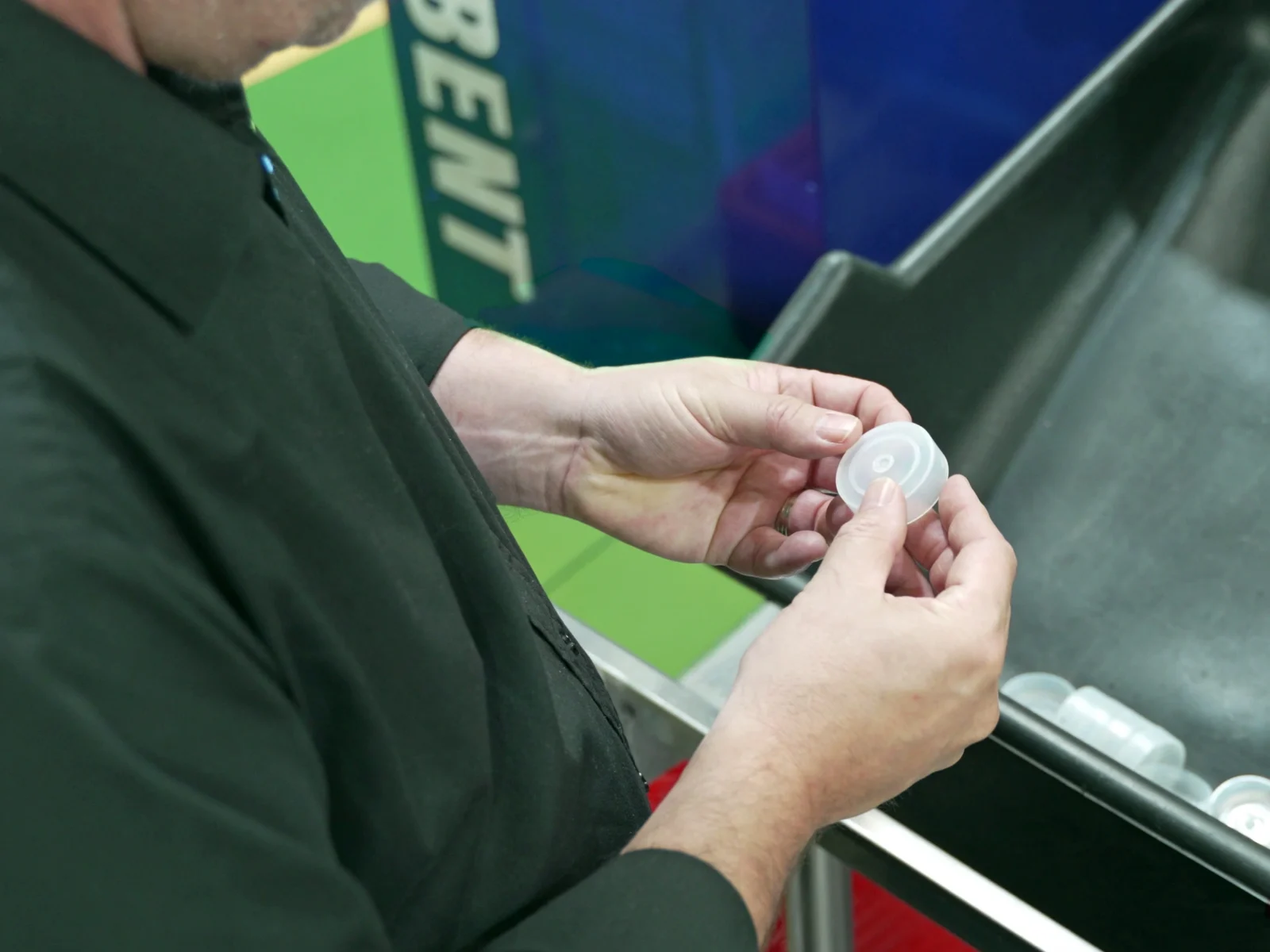
We support customers through design review, material assessment, prototyping, tooling, injection moulding and assembly.
Our engineering team can review wall sections, ribs, bosses, tolerances, draft and assembly requirements before the design is fixed.
Potential materials can then be compared against the required mechanical, environmental, cosmetic and commercial performance.
Where material behaviour is critical, rapid tooling can support testing in production-intent polymers before full tooling is commissioned.
Once the material and design have been validated, the selected polymer informs shrinkage allowances, gating, cooling, venting and tool-steel requirements.
From our facility in Worthing, West Sussex, we support manufacturers and product teams across Sussex, the South East and the wider UK.
Choose the Material That Fits the Complete Requirement
Material selection for injection moulding is a balance between performance, mouldability, cost and risk.
Strength matters, but so do temperature, chemical exposure, shrinkage, finish, assembly and tooling behaviour.
Sustainability matters as well, but lower-impact options should be selected using engineering evidence rather than assumptions.
The strongest projects define the end-use requirements first, compare realistic material options and test areas of uncertainty before committing to production tooling.
Discuss your next project with our engineering team to assess material options, tooling requirements and production risks before the design is fixed.
