Injection Moulding Environments Are Not One-Size-Fits-All
Injection moulding environments lie on a spectrum rather than a simple yes-or-no choice.
At one end is controlled moulding carried out in a disciplined, well-managed production space.
At the other is an ISO-certified cleanroom manufacturer, designed for regulated or contamination-critical applications.
White Room moulding sits between these two, ensuring heightened environmental control where it adds real value.
What Is White Room Injection Moulding?
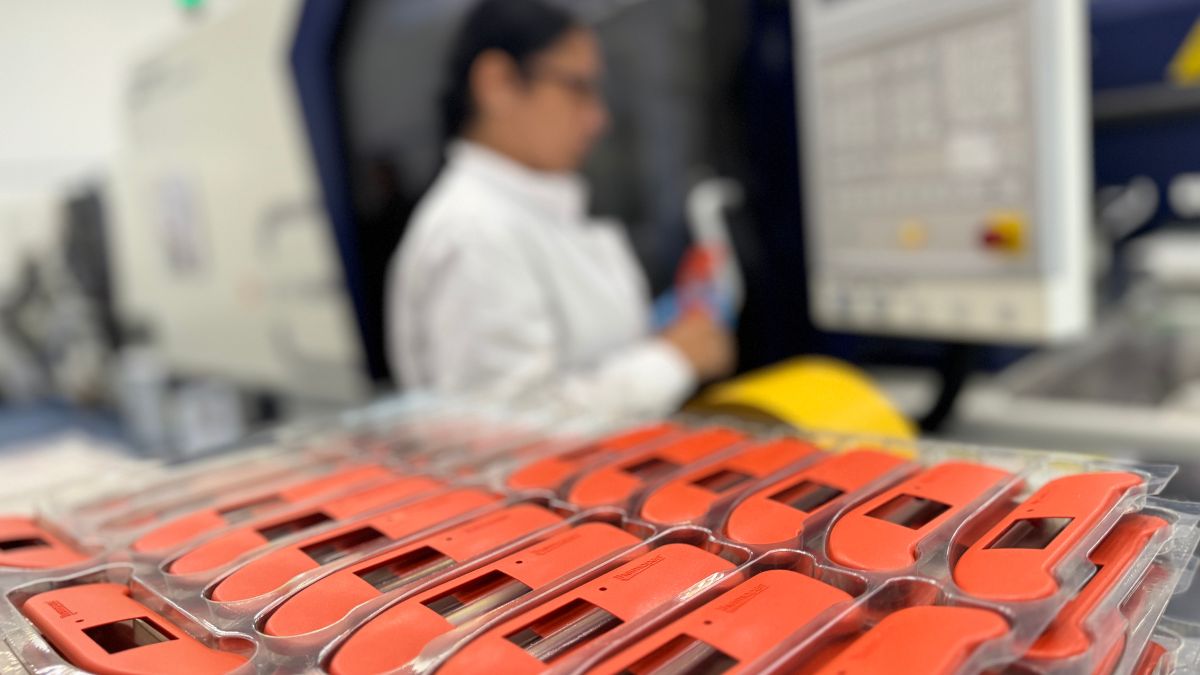
White Room injection moulding provides a cleaner, more controlled environment than standard moulding, without the certification, validation, and overheads associated with a cleanroom.
The focus is on reducing contamination risk, improving surface finish, and increasing process stability rather than meeting formal regulatory standards.
White Room environments typically feature:
- controlled housekeeping and cleaning protocols
- disciplined material handling and purging procedures
- reduced airborne contamination
- improved consistency for cosmetic and optical parts
This approach supports higher-quality outcomes while remaining commercially efficient.
What Is Cleanroom Injection Moulding?

Cleanroom injection moulding is carried out within a certified ISO environment, typically ISO Class 7 for plastic injection moulding.
This level of regulation is designed for applications where contamination directly affects safety, regulatory compliance, or product performance.
Cleanroom moulding involves:
- certified air filtration and particle control
- strict gowning and access protocols
- validated processes and documentation
- controlled assembly and packing
- rigorous cleaning and maintenance procedures
ISO-certified cleanroom settings are essential for regulated, sterile applications, but they incorporate supplementary costs and operational complexity.
Key Differences Between White Room and Cleanroom Moulding
Level of Environmental Control
White Room moulding reduces contamination through discipline and control, but it is not ISO certified. Cleanroom moulding provides validated, measurable particle control in accordance with defined standards.
Regulatory Requirements
White Room moulding is suitable where regulation does not mandate a certified environment. Cleanroom moulding is required where standards, audits, or sterility requirements apply.
Process Complexity
White Room processes are enhanced but flexible. Cleanroom processes are stricter, slower to change, and require extra documentation and validation.
Cost Implications
White Room moulding offers a cost-effective way to improve quality. Cleanroom moulding carries higher operational costs due to energy use, staffing protocols, PPE requirements, and compliance overheads.
When Is White Room Moulding the Right Choice?
White Room moulding is typically appropriate when:
- cosmetic appearance is critical
- optical clarity or light transmission matters
- minor contamination can affect performance
- surface finish consistency is important
- cleanroom certification is not required
Typical components include:
- visible housings and enclosures
- optical or light-guiding parts
- consumer-facing products
- technical components with tight tolerances
In these cases, White Room moulding improves outcomes without introducing unnecessary cost.
When Is Cleanroom Moulding Required?
Cleanroom injection moulding is necessary when:
- regulatory standards specify ISO conditions
- components are sterile or contamination-critical
- products are used in medical, pharmaceutical, or diagnostic applications
- traceability and validation are mandatory
Typical applications include:
- medical consumables and diagnostic components
- pharmaceutical and life-science products
- sensitive electronic assemblies
- applications where failure carries safety or compliance risk
In these cases, cleanroom manufacture is not optional. It is a requirement.
Do You Really Need Cleanroom Injection Moulding?
This is the most important question to ask at the outset of any project.
Many cleanroom enquiries arise from a desire to improve quality, not from a genuine regulatory or technical requirement. In these situations, White Room or controlled moulding environments often deliver the necessary improvements more efficiently.
Understanding the difference early helps avoid:
- unnecessary cost
- longer lead times
- over-engineered processes
- reduced flexibility during production
A clear assessment of risk, regulation, and performance requirements leads to better outcomes.
Choosing the Right Moulding Environment
Selecting the appropriate moulding environment should be based on:
- regulatory obligations
- functional and cosmetic requirements
- contamination sensitivity
- production volumes
- commercial constraints
Nordell supports a tiered approach to injection moulding environments, from controlled moulding as standard through to White Room and ISO Class 7 cleanroom production.
Explore our full range of plastic injection moulding services.
Final Thoughts
White Room and cleanroom injection moulding serve different purposes. One is not better than the other by default.
The right choice depends on what the part genuinely requires, not on assumptions.
Making that distinction early helps protect quality, cost, and long-term production performance.
Understanding the difference is often the key to avoiding unnecessary complexity and ensuring the most effective manufacturing strategy.
If you are uncertain whether your application genuinely requires cleanroom production, Nordell’s engineering team can help assess the most appropriate moulding environment.
By reviewing functional, cosmetic, and regulatory requirements early, it is often possible to achieve the right balance of performance, cost, and process control from the outset.
