The Link Between Moulding Environment and Defects
Contamination-related defects are rarely caused by a single factor.
While tooling design and process control play a major role, the surrounding environment often determines whether a process remains stable or becomes unpredictable.
In less controlled mould shops, contamination can enter the process through multiple routes, often without being immediately visible. This leads to inclusions, specking, surface blemishes, or inconsistent part performance, particularly on:
- cosmetic housings
- optical or light-transmitting components
- visible consumer parts
- technical components with tight tolerances
Once contamination is present, process adjustments alone are rarely enough to remove the risk.
Common Sources of Contamination in Injection Moulding
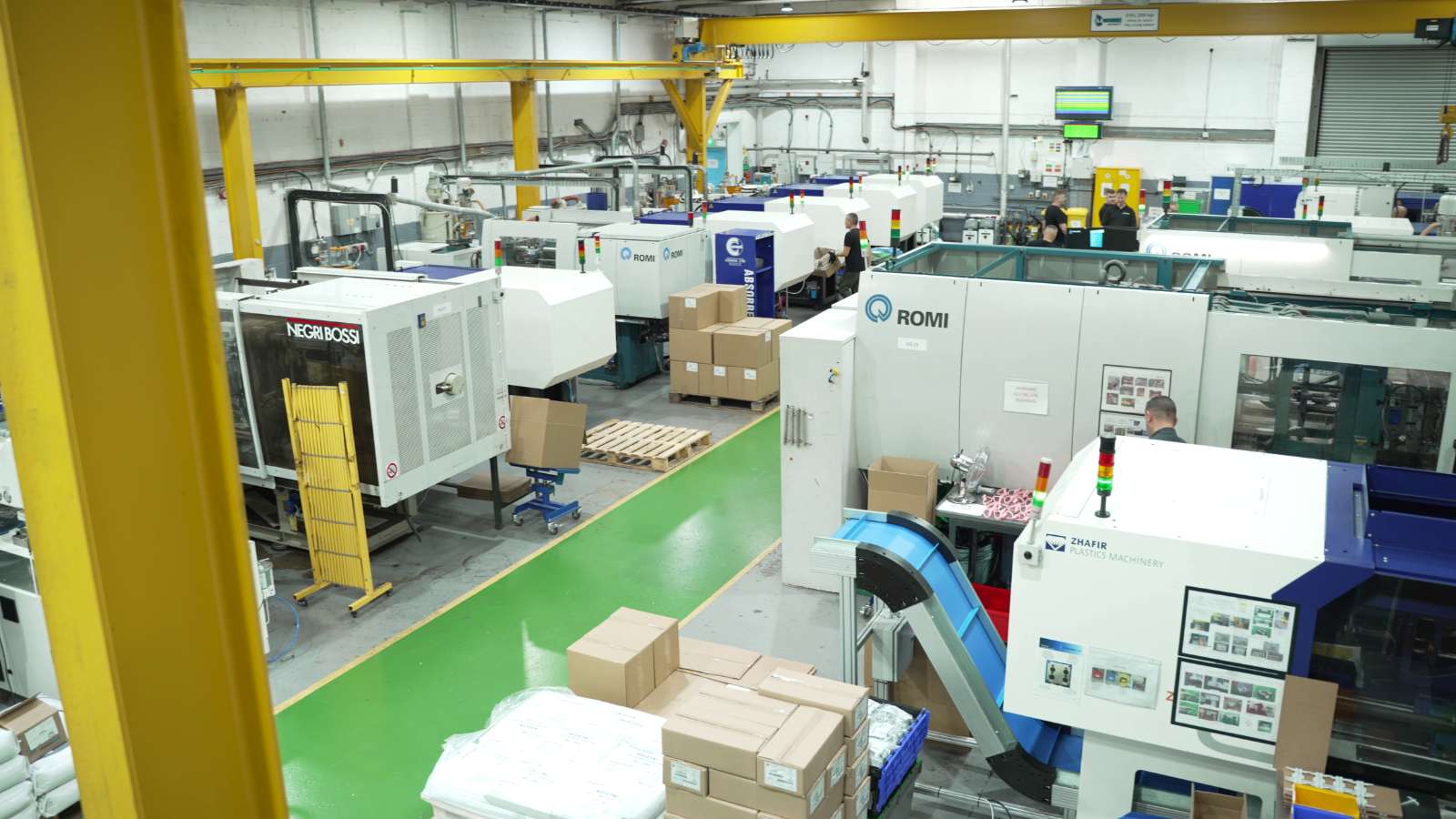
From production experience, contamination in injection moulding typically originates from a mixture of environmental, material, and process-related factors.
Carbonisation and Material Deterioration
Carbonisation occurs when polymer material degrades or burns within the barrel, hot runner, or tooling. Burnt residue can later break free and appear as black specks or streaks on moulded parts.
This is typically connected with extended residence times, insufficient purging, or unstable processing conditions. If not properly addressed, carbonised material can affect multiple production runs.
Poor Mould Shop Cleanliness
General workshop cleanliness has a direct bearing on moulding quality. Dust, debris, and airborne particles can be introduced during tool changes, material loading, part handling, or storage.
Even small fibres or particles can be highly visible on cosmetic or optical components, particularly when moulding lighter colours or transparent materials.
Inadequate Purging Between Jobs
Switching materials or colours without thorough purging is a common cause of inclusions. Residual material left in the barrel or hot runner can result in colour specking, surface defects, or inconsistent finish on subsequent jobs.
This is not only a technical issue. It reflects the level of discipline applied to changeover procedures.
Airborne Contaminants
Fibres from clothing, packaging dust, and particles carried on airflow can settle on tooling or parts during moulding and handling. In uncontrolled environments, these contaminants are difficult to track and easy to introduce.
The more open and busy the mould shop, the greater the risk of airborne contamination affecting finished components.
Raw Material Quality and Handling
Impurities within raw plastic pellets, inconsistent drying, or contamination during material handling can introduce defects before the polymer reaches the machine.
While environmental control cannot compensate for poor material quality, a disciplined moulding environment lowers the chance of additional contamination, compounding the issue.
How Cleaner Environments Improve Injection Moulding Quality
Improving mould shop cleanliness delivers measurable benefits across cosmetic, optical, and technical applications.
Fewer Cosmetic Defects
Cleaner handling and reduced airborne contamination result in fewer inclusions, less specking, and a higher-quality part. This is especially important for visible components where appearance directly affects perceived quality.
Improved Optical Clarity
For clear or light-guiding components, even microscopic contamination may interfere with performance. Cleaner environments support higher clarity, reduced haze, and more consistent optical behaviour across production runs.
Improved Technical Reliability
Contamination not only affects appearance. It can compromise sealing surfaces, snap-fit performance, dimensional accuracy, and long-term durability.
By reducing uncontrolled variables, cleaner moulding environments improve overall functional reliability.
Lower NCR Rates and Reduced Waste
Stable, disciplined environments produce more predictable results. This leads to fewer non-conformance reports, reduced scrap, and less rework, improving both cost control and delivery performance.
Cleaner Injection Moulding Is a Tiered Approach
Not every component requires cleanroom manufacture. However, most components benefit from cleaner, more controlled production conditions.
Controlled Injection Moulding as Standard
A disciplined moulding environment with strong housekeeping, controlled handling, and consistent processes improves quality for the majority of components.
Nordell’s approach to plastic injection moulding is built around controlled production as standard, supporting consistent results across a wide range of applications.
White Room Injection Moulding for Cosmetic and Technical Parts
Where appearance, clarity, or contamination sensitivity is higher, White Room moulding provides enhanced environmental control without the cost or overhead of ISO certification.
This approach is well-suited to cosmetic, optical, and technically sensitive parts that need improved consistency.
Cleanroom Injection Moulding for Regulated Applications
For regulated, sterile, or contamination-critical applications, ISO Class 7 cleanroom moulding provides certified environmental control, validated processes, and clean assembly.
This degree of control is essential where regulation, safety, or product performance depends on minimising particulate risk.
Final Thoughts
Injection moulding quality is determined by more than machines and tooling. It is driven by environmental discipline, process control, and consistency across every stage of production.
Understanding how contamination enters the moulding process and how cleaner environments reduce risk enables manufacturers to make better decisions on quality, cost, and reliability.
A cleaner mould shop is not an upgrade reserved for exceptional parts.
It is the foundation for repeatable, high-quality injection moulding.
Learn more about our approach to plastic injection moulding, or speak to our engineers about the right production environment for your application.
